
Super Highway Frankfurt to Strasbourg
Frankfurt to Strasbourg
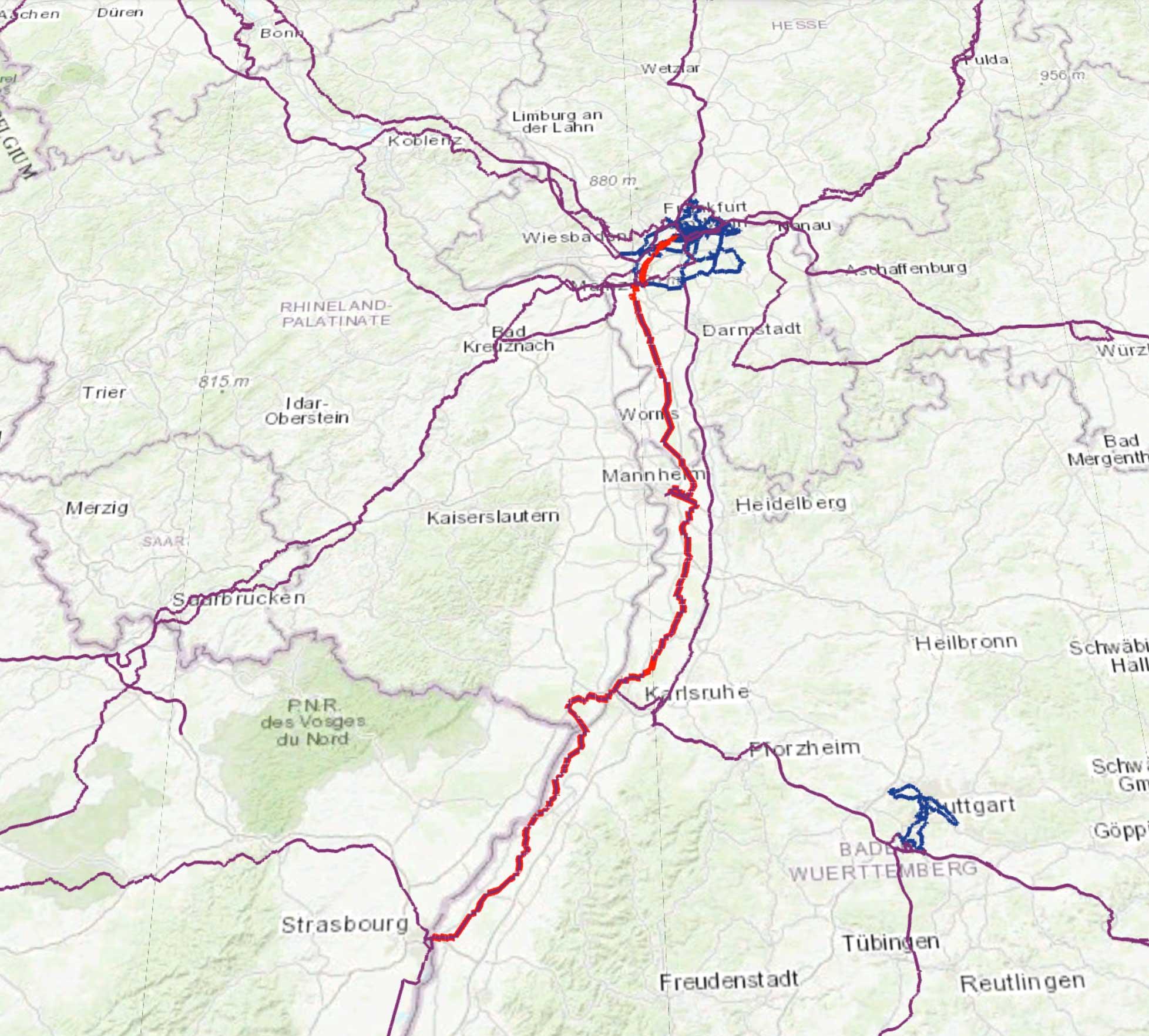
Our newest Super Highway route provides diverse, high-capacity long-haul connectivity between Frankfurt and Strasbourg.
Built in response to increased traffic and demand on the path between the two cities, the route will connect Frankfurt, home to the world’s most interconnected metropolitan network, and Strasbourg, a key interconnection hub for long haul routes, with direct, diverse, low-latency infrastructure.
The route makes up part of euNetworks’ state-of-the-art Super Highway system, developed to address the increasing demand for AI and Cloud-ready connectivity infrastructure across the FLAP-D (Frankfurt, London, Amsterdam, Paris, Dublin) region.
Key Features
Spanning a total of 247km and built with new, high-capacity fibre.
Delivering route diversity that avoids existing high traffic areas and increases resilience.
A high fibre count system providing scalable growth for future bandwidth demands.
Direct connectivity to 76+ data centres in our Frankfurt metropolitan network, alongside seamless connection into our 600+ connected data centres across Europe.
Two new ILAs: ILA sites are built with highly efficient air conditioning, which uses less power for cooling, reducing the system's carbon impact.

Super Highway Insights
An Innovative Subsea Cable Burial that Delivers Unique Benefits
Our subsea cable Scylla was laid using micro-routing – following sand wave contours on the sea bed to provide a deeper, more secure burial that naturally increases over time.
A Network that Supports Pioneering Research for the Future of Communication
Our Super Highway subsea cable Rockabill was used as the location for cutting-edge quantum communication research across the Irish Sea.
New, Unique Routes Connecting Key European Cities
We design uniqueness and diversity into our Super Highways, addressing the demand for new fibre connectivity between cities and data centres across Europe.
Re-imagining Long Haul Network Design
Our Super Highways aren’t constrained by the limitations of legacy fibre types. This gives us the ability to re-think how a long haul route is best designed.